Gamer Slang: Cheating and Cheaters – What's Behind It?

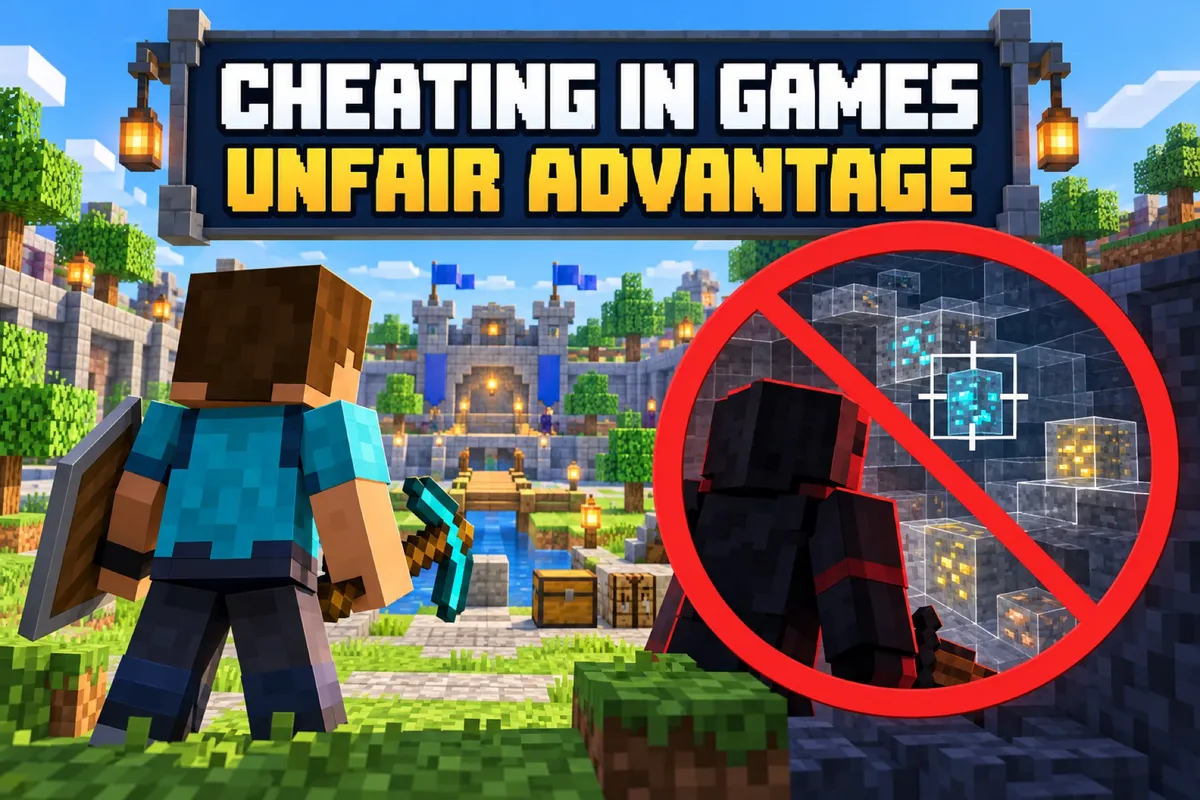
When your child says “He’s cheating!” or “There’s nothing but cheaters on here!”, there’s more behind it than just a bad mood. “Cheating” means bending or breaking the rules – in a gaming context it means someone uses forbidden means to gain an advantage in the game. That can seem completely harmless (“just a little trick”) and go all the way to real fraud that spoils the fun for others and can even break rules or laws.
This article is aimed mainly at parents who want to understand what cheating is, why kids and teens cheat – and where the limits are. At the same time, it is meant to help young people reflect on their own attitude toward it.
What does “cheating” mean in gaming?
At its core, cheating is always the same: someone doesn’t stick to the rules of the game, uses extra aids or changes the game so that he or she has an unfair advantage. Typical examples:
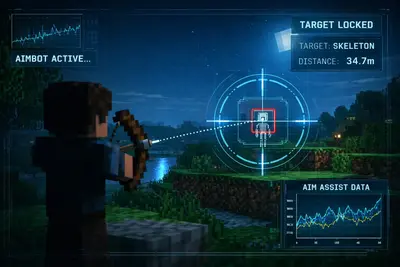
- A program helps you aim in a shooter (aimbot).
- You can see opponents through walls (wallhack).
- You get infinite lives, money or items that others have to work hard to earn in the game.
Important:
Not everything that looks like a “trick” is automatically cheating. Many games have built-in “cheats” in single-player mode (e.g. secret codes) that are officially allowed. It becomes a problem as soon as other real people are playing along and you give yourself an advantage over them that they can’t have, because it breaks the rules.
Cheating in Minecraft: What does it look like in practice?
Minecraft is an interesting special case, because the game itself is already very open and creative. “Cheating” can mean different things here depending on the game mode:
1. Single-player and your own world
In a world you created yourself, you can, for example, turn on “cheats” in the menu. Then you can use commands such as:
/gamemode creative– you switch to Creative mode and have unlimited blocks./give– you give yourself specific items./time set day– it instantly becomes day.
This is officially built into the game and completely fine in a private world. Many kids don’t even call this “cheating” but simply “using commands”.
2. Multiplayer servers and Realms
It becomes a problem when kids play with others on a server that has clear rules – e.g. a Survival server where everyone is supposed to earn their resources honestly. Cheating here would be, for example:
- Hacked clients / “mod clients”: special Minecraft versions that, for example, attack automatically, run faster, fly or show hidden ores (X-ray).
- X-ray texture packs: resource packs that let you see ores or secret rooms through blocks.
- Duping (duplication glitches): exploiting bugs in the game to multiply items, even though the server rules forbid it.
Many servers have anti-cheat systems. Anyone who gets caught can be kicked (thrown out for a short time) or permanently banned (blocked). For kids this can feel very dramatic, because friendships, projects and a lot of invested time are often tied to it.
Why do kids and teens cheat at all?
There are many reasons why young players are tempted to cheat – often they are understandable at first glance, even if the behavior isn’t okay:
- Pressure to keep up: “Everyone is so much better than me, I’ll never catch up.”
- Frustration: A level is “impossible”, an opponent is too strong, you keep losing.
- Curiosity: “I just want to test whether it really works.”
- Recognition: Anyone who “plays insanely well” gets admiration – even if the performance isn’t honest.
- Peer pressure: Friends already cheat and say “It’s no big deal, everybody does it.”
- YouTube/TikTok videos: Influencers show hacks, mod clients or X-ray tricks – sometimes with a wink and a “Don’t try this at home”, which of course still makes it appealing.
For many teens, the line between “modding” (creatively changing the game, e.g. new blocks, textures, minigames) and real cheating also gets blurry. But there isn’t just a game character sitting in front of the screen – there is always a person too, whose gaming experience is affected.
Where is the line between a “trick”, “using a bug” and cheating?
In short:
The more real other players are affected and put at a disadvantage, the more clearly we are talking about cheating.
A rough breakdown:
- Fair / allowed
- Using official game mechanics (e.g. Redstone farms in Minecraft, clever tactics, “speedrunning” tricks).
- Cheats the game provides in single-player mode, when nobody else is affected.
- Gray area
- Using bugs in the game that the developer didn’t intend but that aren’t explicitly forbidden.
- Mods that only change the visuals (e.g. shaders, minimap) – allowed on some servers, forbidden on others.
- Clear cheating
- Programs or clients that automatically aim, attack, run or show information you shouldn’t be able to see.
- External tools that trick servers or wreck other players’ progress.
- Anything that is explicitly prohibited in the terms of use / server rules.
Minecraft servers in particular usually have clearly worded rules (“No hacked clients”, “No X-ray”). Anyone who deliberately breaks them there is cheating.
What are the risks of cheating – even beyond the game?
Cheating isn’t just “digital fibbing”. It can have consequences that many parents underestimate:
- Bans and losses
- Account bans or server bans, lost worlds, skins, friends.
- In extreme cases, paid content (e.g. purchased games) can also become unusable.
- A worse way of handling conflict
- Cheating destroys trust – both in groups of friends and within communities.
- Kids who cheat often face very aggressive reactions themselves (“hate in the chat”).
- A problematic lesson
- Anyone who regularly gets ahead “only with tricks” learns less about dealing with frustration, defeat and real practice.
- The pattern “I’ll just grab an unfair advantage” can carry over into other areas of life.
- Security risks
- Many “cheat programs” and “hacked clients” come from shady sources.
- The risk of viruses, Trojans, password theft and data theft is very high – especially with Minecraft clients downloaded “for free” from just anywhere.
How you can respond as a parent
Instead of just saying “That’s not allowed!”, it helps to talk the topic through calmly with your child. A few practical starting points:
1. Show interest, don’t just judge
Ask your child:
- “What exactly happened?”
- “Why do you think that’s unfair / not that bad?”
- “What rules apply on the server / in the game?”
That way you’ll see how your child judges the topic morally – and you can build on that.
2. Agree on rules together
- Make it clear: in multiplayer games where others are affected, there’s no cheating.
- In your own single-player worlds, cheats can be okay – e.g. to build creatively or to test something.
- What matters is the intention: is your child using cheats to be creative, or to take advantage of others?
3. Talk about fairness and trust
Comparisons from the offline world help:
- Cheating in an online game = copying answers on a test while everyone else works honestly.
- Anyone who cheats all the time eventually loses the trust of the other players – just like in a sports team or a study group.
4. Explain the security risks
Make it clear:
Not every “cheat download” is harmless. Viruses, hacked accounts and stolen passwords are real dangers. The same goes for “free premium accounts” or “cracked clients”.
How you can help kids and teens choose not to cheat
Instead of just banning things, you can support your child in having fun and success without cheats:
- Praise fair achievement: Point it out when your child gets better at a game because they practice, learn and think more strategically.
- Build resilience to frustration: Put defeats into perspective together (“What could you do differently next time?”).
- Play together: If possible, play along yourself or let your child show you how the game works. Many kids light up when they get to explain things.
- Good role models: Influencers who openly speak out against cheating and emphasize fair play can be good role models.
What kids & teens can learn from the topic of “cheating”
For younger and older gamers alike, cheating is more than just “a trick”. It’s a good opportunity to talk about values that go far beyond Minecraft:
- Fairness: Everyone sticks to the same rules so that it’s fun.
- Honesty: Your own strength only feels good if it’s real.
- Respect: Behind every game character is a person whose fun you shouldn’t ruin.
- Responsibility: What I do online has consequences – technically, but also emotionally for others.
Anyone who understands why cheating is unfair learns a lot about teamwork, conflict resolution and getting along online. Those are exactly the skills kids urgently need in an increasingly digital world.
Conclusion: Cheating in Minecraft & co. – an important topic to talk about
“Cheating” is an ever-present term in your kids’ everyday gaming – and it’s more complex than it seems at first glance. In Minecraft the lines often blur: what is just a handy command in your own world quickly becomes a clear breach of the rules on a server with others.
As a parent, you don’t need to know every detail about hacked clients, X-ray and aimbots. What matters more is that you talk openly with your child about fairness, rules and safety and develop a shared attitude together:
Creativity and experimenting – yes, especially in your own worlds. Unfairly holding others back, ruining their fun or taking risks with shady cheats – no.
That way gaming stays a place where kids and teens can try things out, fail, learn and be proud of their honestly earned successes.