Who Are the Villagers in Minecraft? A Detailed Look

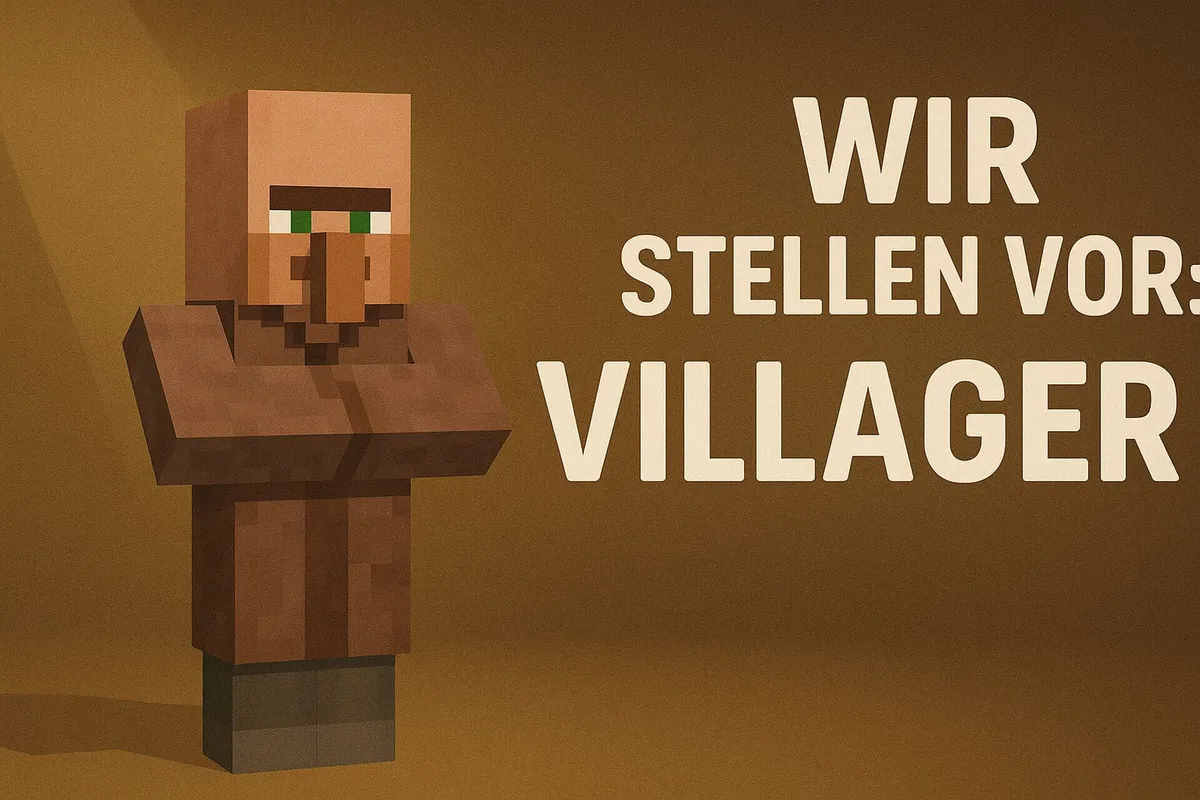
Minecraft is one of the best-known and most popular games in the world. Its huge open world, almost endless possibilities and creative gameplay have turned it into a true cult classic. Alongside the countless creatures, blocks and structures that populate the world, villagers – the inhabitants of villages – are among the most frequently encountered NPCs (non-player characters) in the game. They don’t just play a central role in the world of Minecraft; they are also largely responsible for the game’s economic and social side.
In this blog post, we take a closer look at villagers: who are they, what do they do, how do they interact with players, and why are they so important for gameplay?
What are villagers in Minecraft?
Villagers are peaceful, computer-controlled characters who live in villages within the Minecraft world. They have a humanoid shape but are usually smaller than the player, and they often wear traditional clothing that varies depending on the biome. These villages are commonly found in different biomes such as plains, deserts, taiga or savannas, and serve as small but vital settlements where the villagers live and work.
Although villagers don’t take on an aggressive role in the game, they have an important function: trading. By trading with villagers, players can obtain many valuable resources that are crucial as the game progresses. But villagers aren’t just simple trading objects – they add depth and life to the world of Minecraft.
Villager professions: what do the villagers do?
One of the most interesting aspects of villagers in Minecraft is their professions. Every villager has a specific profession that sets them apart from the others. These professions aren’t just decorative – they give the player the chance to trade different goods and so expand the gameplay. Here’s an overview of the most important villager professions:
1. Farmer
- Role in the game: The farmer is one of the most common professions you’ll find among villagers. He has access to farm products such as bread, carrots, potatoes and melons.
- Trading options: The farmer offers various foods for trade. You can usually also trade seeds and other farm products with him.
2. Librarian
- Role in the game: The librarian is a key profession for players who are interested in enchanting. Librarians offer enchanted books and other useful magical items for sale.
- Trading options: You can buy enchanted books that help you enchant tools, weapons and armor.
3. Toolsmith and Weaponsmith
- Role in the game: These are two separate professions: the toolsmith works at a smithing table and trades tools, while the weaponsmith works at a grindstone and trades weapons. Both offer you iron as well as diamond gear.
- Trading options: From them you can buy valuable equipment such as shovels, axes and swords, often with useful enchantments.
4. Armorer
- Role in the game: The armorer works at a blast furnace and is responsible for offering armor. Villagers with this profession often sell different kinds of armor (such as iron, diamond or chainmail armor).
- Trading options: From him you can buy high-quality armor and also shields that help you in battle against hostile creatures. He also buys lava buckets from you.
5. Cleric
- Role in the game: The cleric sells redstone dust, lapis lazuli, glowstone, ender pearls and Bottles o’ Enchanting.
- Trading options: The ender pearls are especially handy when you’re getting ready for a trip to the End. Lapis lazuli and Bottles o’ Enchanting also help you with enchanting.
6. Leatherworker
- Role in the game: Leatherworkers offer leather goods. These can come in the form of leather caps, tunics and pants.
- Trading options: The leatherworker can also offer armor that’s useful before you head into more dangerous areas such as the Nether.
7. Fisherman
- Role in the game: The fisherman buys string, coal and raw fish from you. In return he sells buckets of cod, cooked cod and salmon, campfires, enchanted fishing rods and boats.
- Trading options: You can buy fish from him for food or gear up for fishing with an enchanted fishing rod.
Interacting with villagers: trading and relationships
Interacting with villagers is a central element of the game. Trading is the most important way to interact with them. Trading works through a simple exchange system: you give the villager certain resources, and in return they give you items. This can range from simple food all the way to powerful enchanted books and armor.
- Trading behavior: Villagers have different trading conditions. Some goods can be exchanged several times for the same resources, while others are only available once.
- Trading levels: Villagers can reach different levels (Novice, Apprentice, Journeyman, Expert and, at the top, Master) the more they trade with the player. These levels improve the quality of the goods on offer.
On top of that, you can influence how much the villagers like you by protecting villages or completing certain tasks, such as destroying hostile structures or fighting monsters.
Why are villagers so important for Minecraft?
Villagers don’t just play a practical role as traders – they also have a deeper meaning for the Minecraft game world. Their villages are often the place where you can find valuable items and resources. Especially in the early stages of the game, villagers provide important support through their trades.
What’s more, the villages themselves are an interesting element of the game: they create a lively atmosphere and give players the chance to settle down, interact with the inhabitants or build their own structures.
Another important aspect is the economic factor. Trading with villagers lets you steer your goals in the game in different directions, whether by collecting rare resources or building your own “trading town”.
Conclusion
Villagers in Minecraft are far more than just passive NPCs wandering randomly around the game world. They are a central pillar of the game that significantly enriches and expands the gameplay. Through their different professions, which offer a wide range of trading options, they play an important role in gathering resources and allow players to progress in the game.