Understanding Minecraft: An Honest Guide for Worried Parents

Why the game millions of kids love is far less dangerous than it might seem at first glance.
Why Minecraft often worries parents
At first, Minecraft can seem threatening to many parents: a seemingly endless game with no goal, full of monsters, online contacts and hours of staring at a screen. Especially if you grew up without video games yourself, it’s easy to feel uneasy – and that’s completely normal. Parents want to protect their children. But from our experience, we can say this: most of the fears surrounding Minecraft are based on misunderstandings.
The game isn’t a violent game, it isn’t a social media rabbit hole and it isn’t an “addiction machine.” At its core, Minecraft is a digital construction kit. You can compare it to a digital bag full of building bricks. Kids create worlds, experiment with materials and, in the process, experience a deep sense of self-efficacy. That’s something their brain loves: success through their own actions.
What Minecraft triggers in your child’s brain
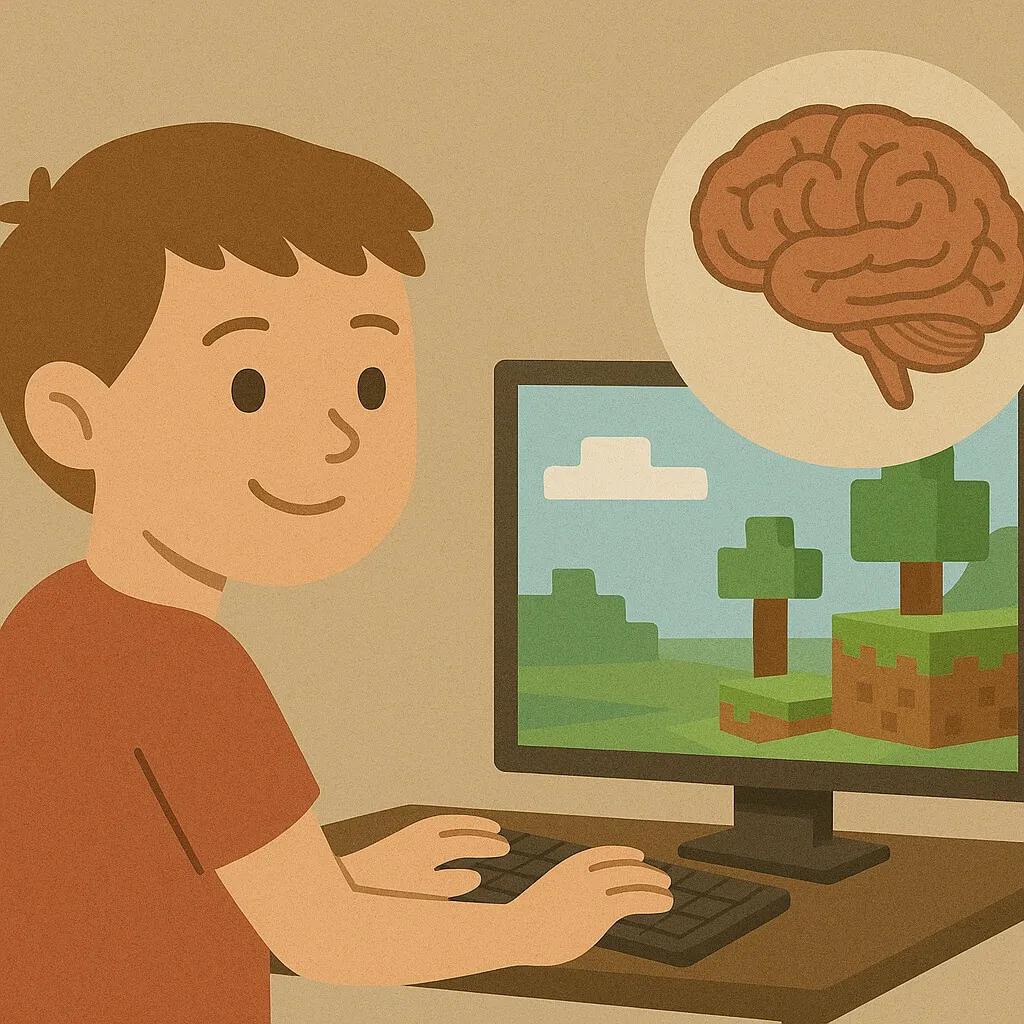
Research on video games has repeatedly observed that games like Minecraft activate the same learning networks that kick in during creative play with Lego, crafting or exploring. Dopamine, the “motivation hormone,” is released when a child creates something new or solves a problem. This isn’t an uncontrolled rush like with social media, but a targeted, reward-based activation of the motivation to learn.
Minecraft also trains executive functions: planning, self-regulation and problem-solving. Kids learn to manage resources, assess risks and develop creative strategies. In neuroscientific terms, they strengthen exactly those areas of the prefrontal cortex that later become crucial for learning at school and organizing themselves.
Of course, even a good game can tip over – when kids are overstimulated, overwhelmed or socially isolated. That’s why parental guidance is so important.
Why fear achieves the opposite of control
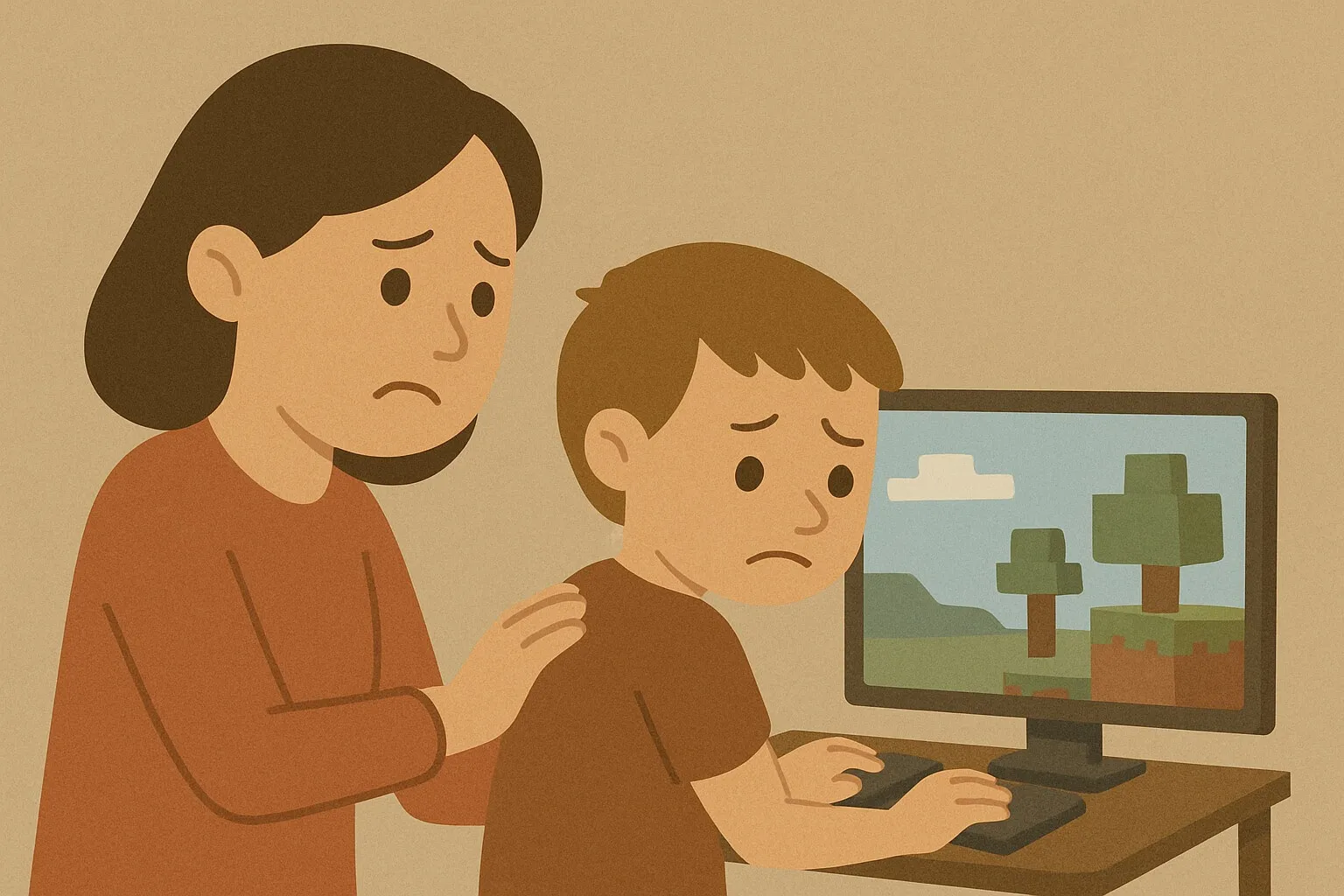
Many parents respond to uncertainty with control: taking devices away, banning playing times, blocking servers. In the short term, that feels safe – in the long term, it damages the relationship. Kids then learn: “My parents don’t understand my world.” As a result, gaming moves into secrecy.
Instead, I recommend trusting co-regulation. Sit down with your child for a few minutes and let them show you what they’ve built. Ask questions: “Why did you do it that way?” or “What happens if you try this?” This shared experience activates oxytocin – the bonding hormone – and strengthens the trust between you. That way, you remain part of their digital world instead of watching from the outside.
Minecraft can open up room for development
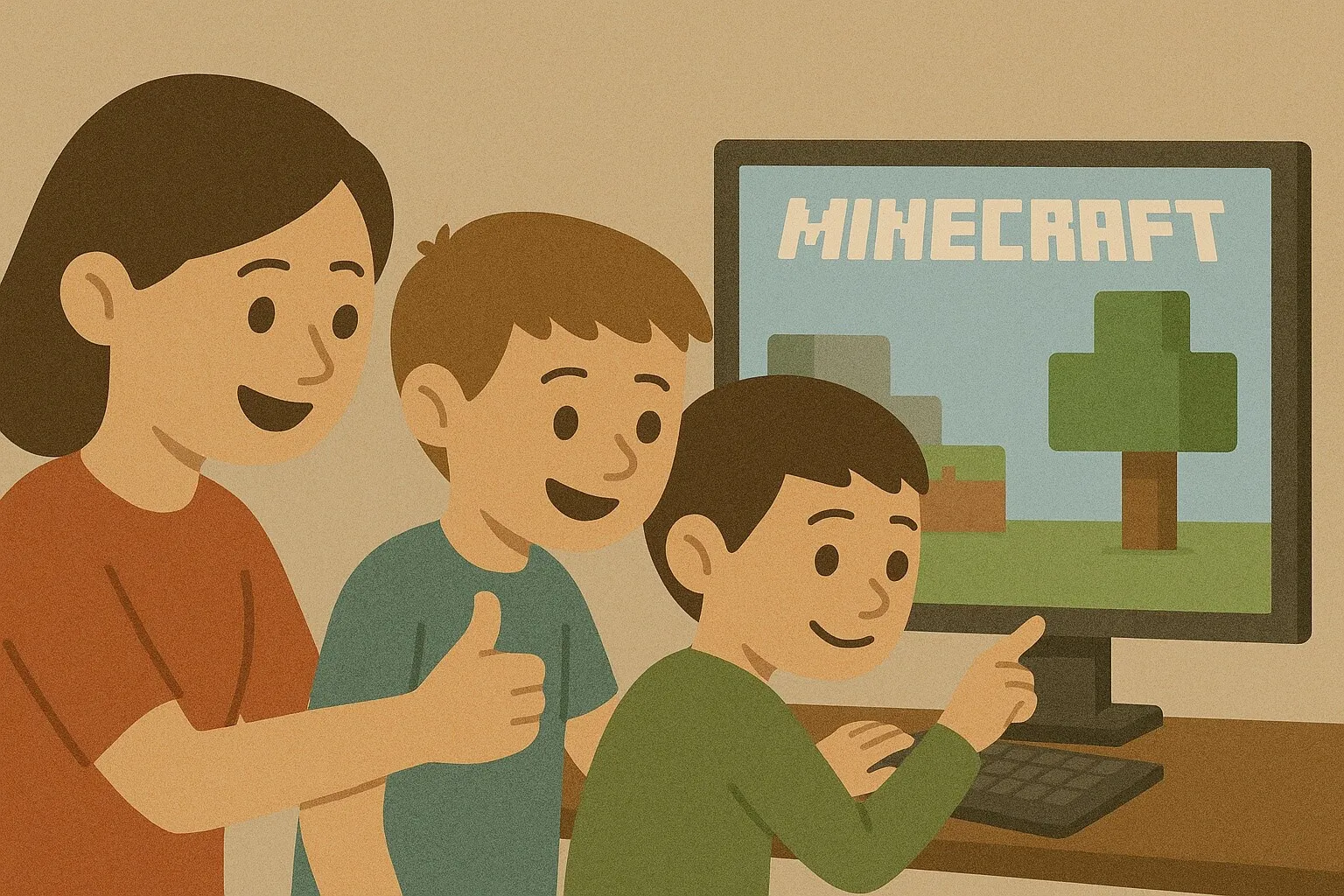
When kids play together on servers, they learn cooperation, communication and a sense of responsibility. They mediate conflicts, share resources and often develop leadership skills all on their own. What’s particularly interesting: various studies have shown that kids with social insecurities often build self-confidence for the first time in Minecraft, because there they earn recognition for what they achieve – regardless of their body, clothing or background.
Practical tips for parents
- Set clear but flexible rules for playing time: Fixed periods (“after homework until 6 p.m.”) work better than rigid minute counts.
- Offer offline alternatives: Kids need balance, not bans. Exercise, nature and real-life contact help keep the reward system in balance.
- Find your own way in: Ask your child to explain what Redstone is, or join them for an hour in Creative mode.
- Pay attention to safety: Only play on well-known servers, and never share personal information.
- Praise instead of fear: Emphasize what your child is learning (“That’s a really clever build!”). This strengthens self-esteem and a sense of responsibility.
Conclusion: Minecraft isn’t an enemy, it’s a tool
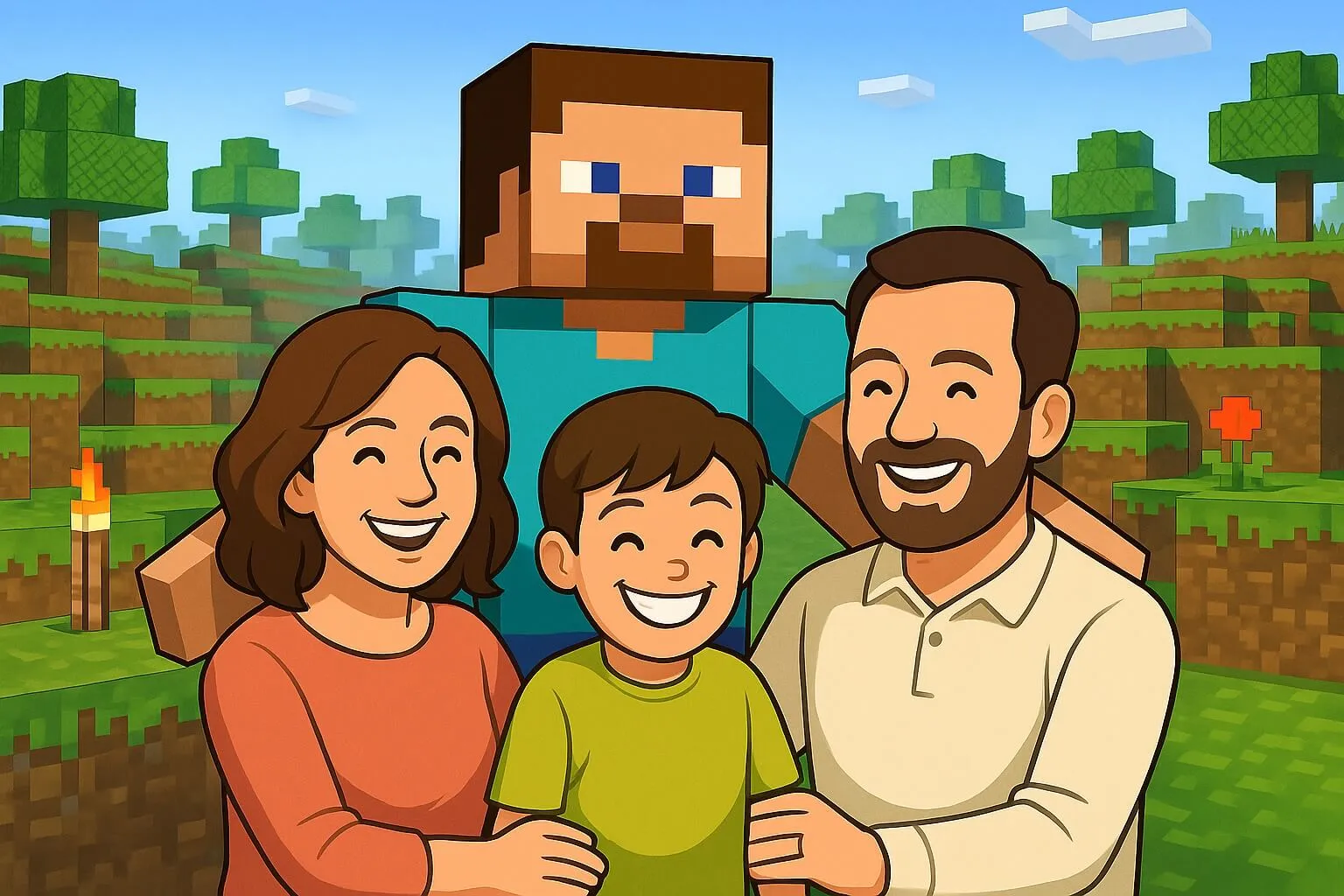
Minecraft isn’t an enemy, but a modern learning tool – a digital sandbox in which kids practice creativity, perseverance and teamwork. Fear leads to distance; understanding leads to connection. If you, as a parent, dare to take the step of looking closer instead of looking away, you’ll discover that Minecraft can be a bridge: between worlds, between generations – and sometimes even between parents and children.