Gamer Slang: What Is Griefing?

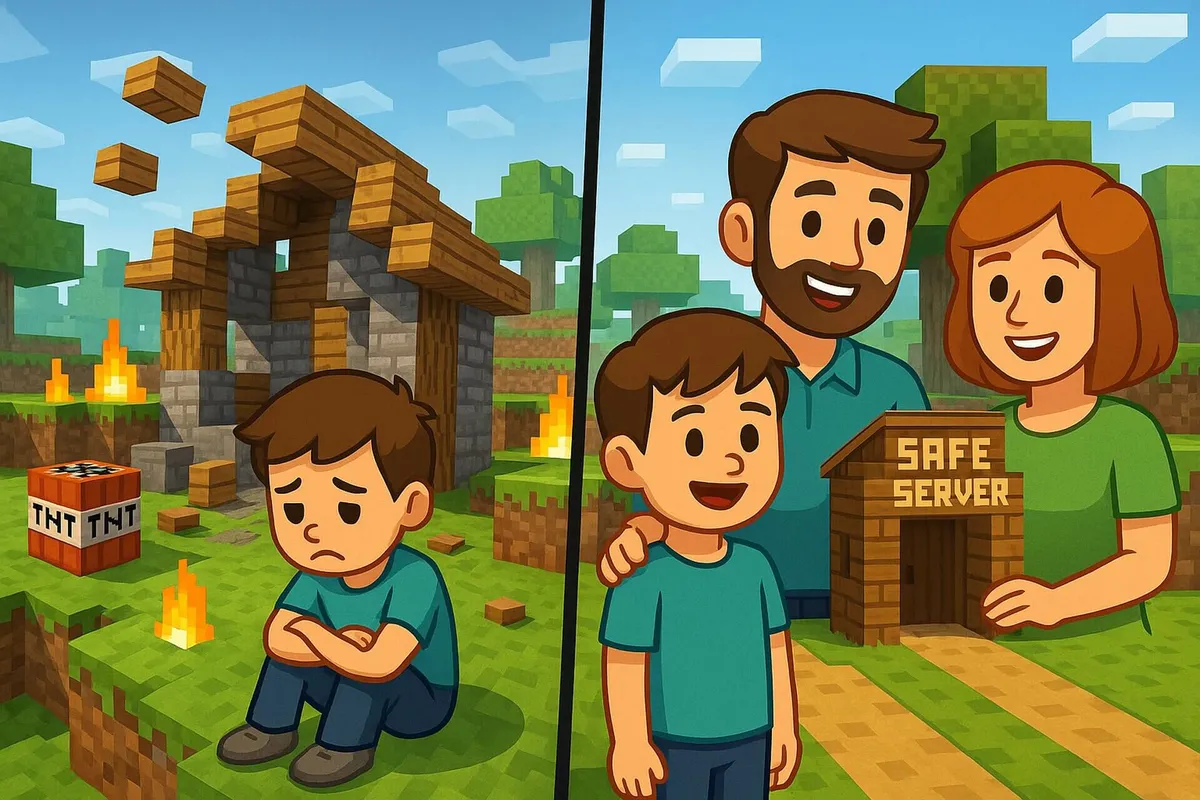
At its core, griefing is nothing more than deliberately “annoying” other people in online games – but on a level that can thoroughly spoil everyone else’s fun. The term comes up constantly in Minecraft in particular, so it’s good for you as a parent to know what’s behind it and how you can protect your child from it.
What does “griefing” mean?
“Griefing” comes from the English word “grief” (sorrow or trouble) and describes the behavior of players who deliberately ruin the game experience for others.
Typical examples:
- Destroying other people’s builds or “covering them over” with junk blocks
- Stealing items or throwing them into lava or fire
- Killing other players again and again for no reason
- Deliberately breaking the rules to cause chaos
Important: griefing is not “normal” competition like an exciting PvP duel (player vs. player). It’s not about fair play – it’s about frustrating, provoking or humiliating others. Anonymity often plays a part, too: behind a screen, some people dare to do things they would never do in real life.
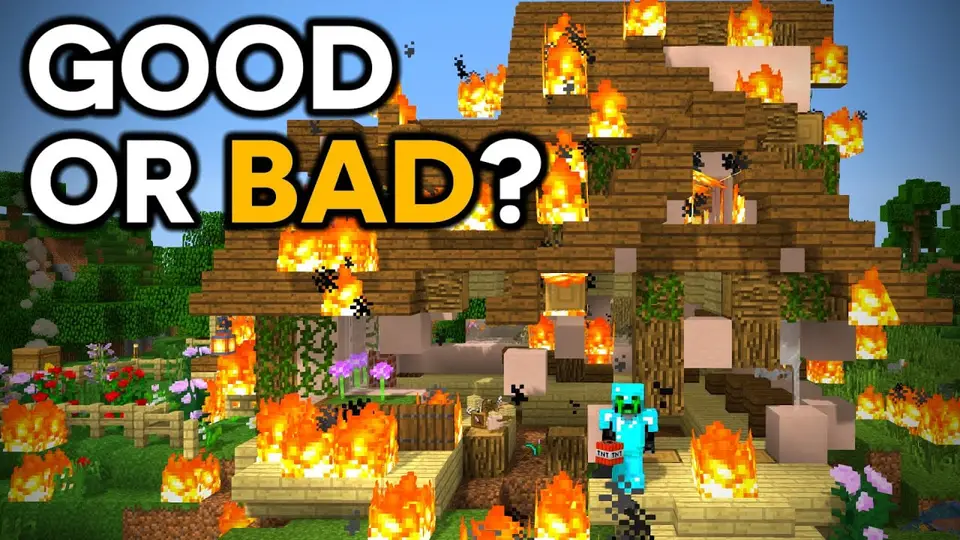
Griefing in Minecraft: what does it actually look like?
Minecraft is a creative building and adventure game – and it’s exactly this creativity that makes it vulnerable to griefing:
- Your child spends days building a house, a town or a Redstone machine – and someone blows it all up with TNT.
- On a public server, another player steals all the valuable items out of the chests.
- In a shared world, animals, crops or villagers are deliberately killed or blocked in.
- Players pour lava or water over builds so that everything gets flooded or burned down.
The following video is in German:
On many Minecraft servers, griefing is explicitly banned and can lead to warnings or a ban. On others (for example certain anarchy servers), it’s part of the concept – which is usually not suitable for younger children.
Why is it so upsetting for kids?
For kids (and, honestly, for plenty of teens and adults too), their own build in Minecraft is more than just “a few blocks”:
- A lot of time and effort has gone into it.
- They often build together with friends – it’s a social project.
- They’re proud of the result, share screenshots and talk about it.
When someone then destroys it all, it can feel like someone kicking a picture they painted themselves or deliberately smashing a Lego model they built.
Typical reactions:
- Frustration (“But I spent so long building it!”)
- Anger (“Why would anyone do that?!”)
- Shame (“Did I do something wrong?”)
- Withdrawal (“I’m never playing there again.”)
Especially when kids can’t yet properly separate that it’s “just” a game, griefing can really hurt emotionally.
How can you deal with it as a parent?
1. Show understanding – don’t brush it off
Phrases like “It’s only a game” don’t help – quite the opposite.
Better:
- “I can see this really upsets you. You spent a long time building that.”
- “Tell me exactly what happened.”
Just realizing “Mom/Dad takes this seriously” is already a relief for many kids.
2. Make sense of the situation together
Help your child understand what happened:
- Someone griefed on purpose to provoke.
- That says something about that person – not about your child.
- Many games have rules, and you’re allowed to complain or get help.
That way your child learns: it’s not my “fault” when others behave badly.
3. Use protective measures (especially in Minecraft)
There’s quite a lot you can do to reduce the risk:
- Your own server / Realm with people you trust
Whenever possible, let your child play only with friends or players they know. - Whitelists and permissions
On many servers you can control exactly who is allowed to build, mine blocks or open chests. - Backups
Regular backups of the world mean that destroyed builds can be restored. - Read the server rules
Reputable servers have clear anti-griefing rules and moderation.
If your child plays on a public server, it’s worth taking a quick look at its website and rules – how seriously is griefing taken there?
4. Report it, document it, draw conclusions
If your child has been griefed, you can work together to:
- Take screenshots
- Note down names and the time it happened
- Report the whole thing to the server team
If nothing happens and griefing is tolerated there, the best protection is often: switch servers.
Talking to kids and teens: what they should know about griefing
Griefing is a great starting point for talking with your child about online behavior:
- What’s fair, and what goes too far?
For example, a funny prank among friends (that gets undone afterwards) vs. deliberate destruction. - Empathy
“How would you feel if someone destroyed your house in Minecraft?” - Personal boundaries
Your child is allowed to say: “I don’t want to play with this person anymore.” - Resolving conflicts
First try talking, then report it – and if all else fails, leave.
Important: make it clear that griefing isn’t “cool trolling” but something that hurts others. And that you shouldn’t join in yourself – not even because of peer pressure.
Drawing the line: what is not griefing?
Not everything someone doesn’t like is automatically griefing. Examples of things that are not griefing:
- simply losing in a competitive game
- a planned PvP fight in Minecraft that everyone agreed to
- misunderstandings, for example when someone mines something by accident
Context matters: did everyone understand the same game mode? Were there rules? Was it intentional?
Explained briefly for kids and teens
If you want to explain it to your child in one sentence, it could sound like this:
“Griefing means someone in a game does deliberately mean stuff just to spoil other people’s fun – for example wrecking houses in Minecraft or stealing things.”
And then follow up right away:
- “Has that ever happened to you?”
- “How did you deal with it?”
This leads to a conversation as equals – and you stay connected to your child’s world.
Conclusion: take griefing seriously, but don’t feel helpless
Unfortunately, griefing is part of the reality of many online games, and Minecraft is no exception. But:
- Your child can learn to deal with it.
- With understanding, conversation and a few technical settings, you can soften a lot of the impact.
- And together you can find servers, groups of friends and game rules that encourage creative building instead of destructive nonsense.