Gamer Slang: What Is Trolling?

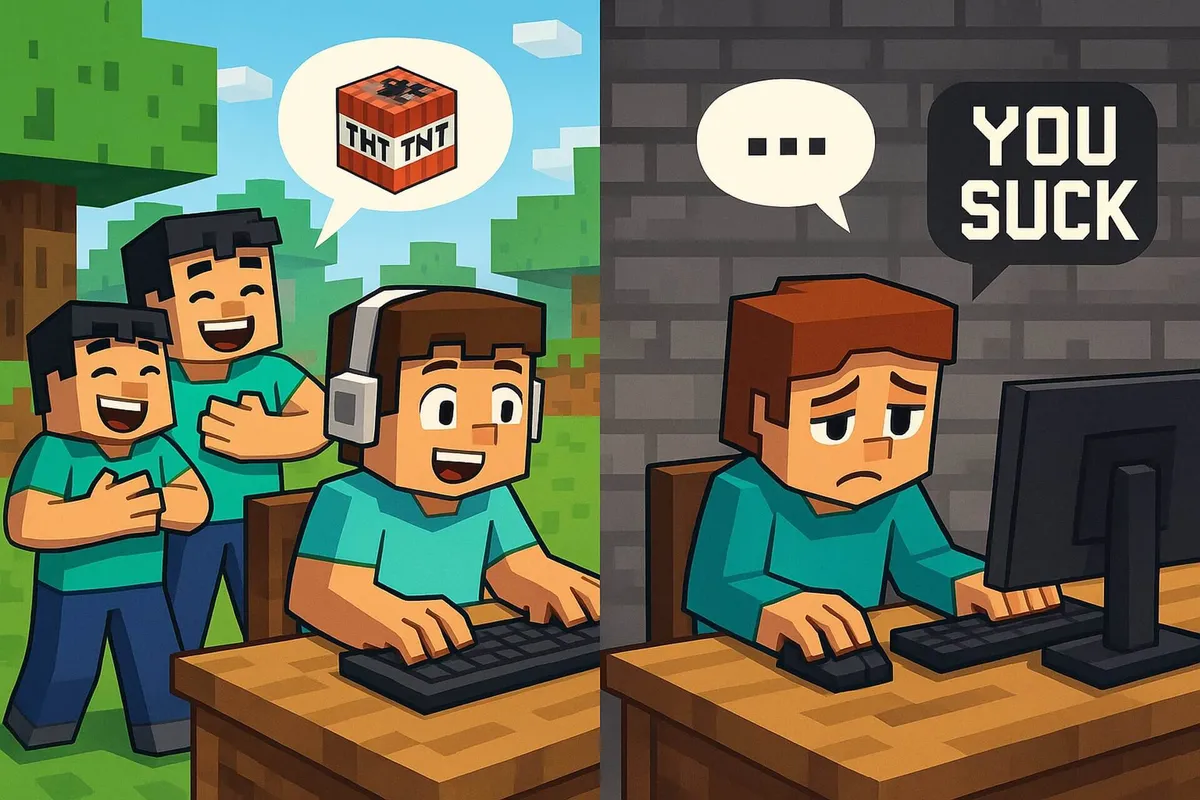
Trolling in Minecraft means deliberately provoking, teasing or throwing other players off their game – often with a wink, but sometimes going well beyond that. For kids in particular, it’s important to understand where the fun stops and things become unfair or hurtful.
What is “trolling” anyway?
“Trolling” comes from internet culture and describes behavior where someone deliberately annoys, provokes or confuses others – usually to get a reaction.
In Minecraft, it can range from harmless to really distressing, depending on what’s going on:
- small pranks among friends (e.g. a funny block swap that’s easy to undo)
- annoying actions that constantly disrupt others (e.g. trapping someone over and over again)
- targeted provocation in chat or voice (digs, mockery, insults)
Note: this video is in German.
Important: trolling isn’t automatically “mean”, but it can tip over very quickly – especially when not everyone involved is laughing.
Typical trolling examples in Minecraft
A few typical situations that many players will recognize:
- Hidden blocks / traps
Someone secretly builds a trapdoor into the floor or replaces stone in the mine with lava – the other player falls in or loses items. - “Friendly help” that isn’t
Someone pretends to help with building, but places pointless blocks everywhere or secretly tears things down again. - Role swaps & disguises
Players wear identical skins or act deliberately confusing (“I’m not who you think I am…”). - Chat & voice trolling
Constantly interrupting, goofing around, making noises, imitating others or provocative remarks that eventually get personal. - The Rickroll
An internet classic: someone sends a link to a supposedly secret trick or leak, and it turns out to be Rick Astley’s music video “Never Gonna Give You Up”. Harmless, short and usually good for a laugh on both sides – a good example of a “good troll”.

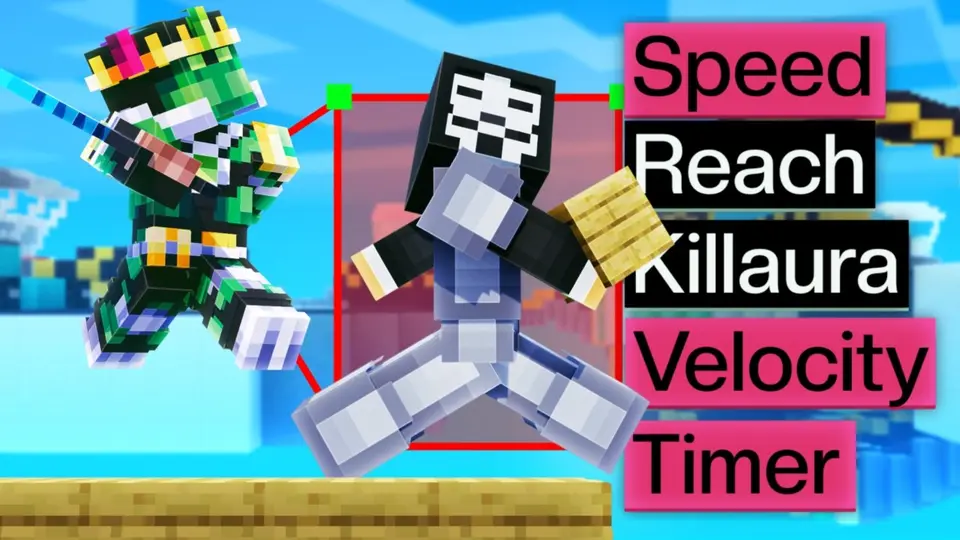
As long as everyone involved is on board and laughing, it can be funny. But if someone is clearly annoyed or seems hurt and keeps getting provoked anyway, trolling becomes a problem.
How it differs from griefing
Trolling and griefing overlap, but they’re not the same thing:
- Trolling: the goal is the reaction – confusion, laughter, annoyance. The damage is often limited or can be undone.
- Griefing: the goal is destruction and frustration – builds get wrecked, items are destroyed on purpose, rules are clearly broken.
A rule of thumb for kids:
“If your prank permanently breaks something or someone doesn’t enjoy playing at all anymore afterwards, you’re probably not trolling anymore – you’re griefing.”
Why trolling can be difficult for kids
Younger kids in particular find it hard to judge:
- Do the others still mean it in fun – or are they laughing at me?
- Am I allowed to say “stop” if a joke bothers me?
- Am I boring if I don’t join in?
On top of that: online, there are no facial expressions or gestures. You can’t always tell right away how much something hurts. That means kids can quickly end up in situations where a supposedly funny prank turns into bullying.
A good test: Is it always the same person on the receiving end, and are they not laughing along? Then it’s no longer trolling but exclusion or bullying. At that point at the latest, you should step in.
How can you help as a parent?
1. Talk to your child about “boundaries”
Ask yourselves together:
- What still feels funny to you?
- At what point does it start to feel bad or unfair?
- How can you say: “Hey, please stop, I don’t like that”?
A simple rule:
“If at least one person doesn’t think it’s funny anymore, the fun is over.”
2. Good trolls vs. bad trolls
You can go through some examples with your child:
- Good troll:
A harmless surprise that can be undone quickly, and afterwards everyone laughs – including the “victim”. - Bad troll:
Someone loses important items, gets laughed at or is humiliated in chat, even though they asked for it to stop.
That way, your child learns to look not only at their own fun, but also at other people’s feelings.
3. Reflect on their own role
Also talk about the fact that your own child:
- can experience trolling,
- but can also troll others without meaning any harm.
Questions for a short conversation:
- “Have you ever pranked someone in the game – how did they take it?”
- “What would you do differently if you noticed someone was upset?”
Protection on servers and in friend groups
On open servers in particular, trolling is almost bound to happen. You can help by:
- Recommending playing mainly with friends they know (a Realm, your own server, a small community server).
- Looking out for clear rules: Does the server have rules about respect, chat, PvP & griefing/trolling?
- Using mute/block features: Annoying players can be muted or blocked (see the next section for how).
- Restricting chat via the Microsoft account: For younger kids, you can set in the family settings that they can only chat with friends or not at all. We explain how in What Age Should My Child Be Allowed to Play Minecraft?
- Switching servers if problems keep coming up: If the atmosphere is toxic all the time, it’s often easier to just move on.
Report, hide, block: how it works in Minecraft
- Java Edition: On a server, the P key opens the “Social Interactions” screen. There, your child can hide a player’s chat messages, block them via the Microsoft account or report them to Mojang – for example for chat messages, skins or names. According to Mojang, reports are reviewed by staff and can lead to a ban from online play.
- Bedrock Edition: A player can be reported and blocked via their profile, even if you’re not friends.
- On servers: Public servers have their own rules and moderators. Many have a command like
/reportor a Discord channel for reports.
What’s allowed in Minecraft multiplayer is set out in the official Minecraft Community Standards.
Dealing with trolling: strategies for kids
You can give your child a few simple strategies:
- Say clearly what’s bothering you
“Please stop that, I don’t think it’s funny.” - Don’t overreact
Many trolls want to see strong emotions – staying calm takes away their “fun”. - Get support
Bring in friends, server moderators or parents when it gets too much. - Switch servers/groups
Nobody has to stay with people who treat them badly – not even online.
If your child doesn’t want to talk to you about something: in the UK, Childline offers free, confidential support for children on 0800 1111; in Germany, the equivalent is the “Nummer gegen Kummer” on 116 111.
Conclusion: putting trolling in perspective
Like griefing, trolling is part of the online gaming world – especially in an open game like Minecraft. The key is:
- understanding what is happening,
- recognizing when it goes too far,
- and knowing how to respond.
If you talk openly with your child about it, go through examples and choose suitable servers and fellow players together, Minecraft is more likely to become a place for creative, funny moments – and less of a stage for hurtful troll antics. More gaming terms are explained in our cheat sheet Minecraft Terms Explained.
Frequently asked questions
What does trolling mean in gaming?
Trolling means deliberately provoking, tricking or confusing other players to get a reaction. It ranges from harmless pranks among friends to targeted teasing and insults.
What is the difference between trolling and griefing?
Trolling is about the reaction: confusion, laughter or annoyance. Griefing is about destruction: builds get wrecked or items destroyed. If a joke permanently breaks something, it’s more likely griefing.
What is a Rickroll?
A Rickroll is a classic internet prank: someone promises an exciting link, but it actually leads to Rick Astley’s music video “Never Gonna Give You Up”. It’s the textbook example of harmless trolling.
How do I report a player in Minecraft?
In Java Edition, press P on a server. In the Social Interactions screen you can hide, block or report players to Mojang. In Bedrock Edition, open the player’s profile and use the report option there. On public servers, the server’s moderators can help too.